
What do sea turtles, marshes, and Zoo Atlanta have in common?
Jekyll Island is one of several islands on the coast of Georgia and is home of the Georgia Sea Turtle Center (GSTC). But GSTC doesn’t just work with sea turtles – if you visit, you may also see gopher tortoises, box turtles, softshell turtles, American alligators, and the star of this show, diamondback terrapins.
Terrapins are a unique species of turtle because they are the only species known to live in the brackish water (a mixture of salt and fresh water) of a marsh ecosystem. While these turtles are mostly aquatic, they do travel onto land to bask in the warm sun and to lay their eggs. Unfortunately, on their way to find suitable nesting sites, female diamondback terrapins often cross busy roads, which can result in getting struck by vehicles. These vehicle strikes, combined with other threats, have caused this species to land on the IUCN Red List as Vulnerable.
Fear not! This is where GSTC comes in. They have a dedicated “turtle patrol” that looks for terrapins attempting to cross the road and helps them make it to safety. This turtle patrol also collects injured terrapins for rehabilitation and re-release. There are also bright “Turtle Crossing” road signs, warning motorists to slow down and be on the lookout for terrapins in the road. When injured or deceased females are found, their eggs are collected and safely incubated in the GSTC. Due to a higher ratio of males to females found in the wild, the GSTC incubates eggs at a slightly higher temperature. This produces more females to help balance that disproportion.
But how does Zoo Atlanta fit into this story? Through Zoo Atlanta’s support of GSTC’s Jekyll Island Causeway Conservation Program, each year, Zoo teammates drive down to Jekyll Island with around 25 terrapins, help release those yearlings into the wild, and bring back around 25 new hatchlings to repeat the cycle. This collaboration allows the tiny terrapins the chance to grow through their first year (from the size of a quarter to the size of a softball!) away from predators and other dangers they might face in the wild.
This past September, a few of us from the Education Team were able to join the Herpetology Team for our yearly terrapin swap!
The terrapins started their journey before we did by getting a final health check and a Passive Integrated Transponder chip, or PIT tag. Just like when used with cats and dogs, these PIT tags are inserted under the skin and can be used to identify individuals if they are encountered again. They were then packed into three turtle bins and loaded into the car. We can now say from experience that spending five hours in a car with two dozen turtles can be a little smelly!
Upon our arrival to Jekyll Island, each terrapin was again checked by GSTC vets to ensure they were healthy enough for release. Every one of them passed the test and were cleared for release into their natural, marshy habitat. While the GSTC vets were doing their check, they recognized the unique facial pattern and dark shell of one of the terrapins. The staff and volunteers thought, and later proved, that this terrapin was the offspring of one of their previous, memorable patients!
With 300+ miles behind them and a clean bill of health, the terrapins spent one final night at GSTC before their release while we spent an evening watching a beautiful coastal sunset. The next morning, it was time to say goodbye as the terrapins were once again loaded into bins and driven out to the marsh to be released.
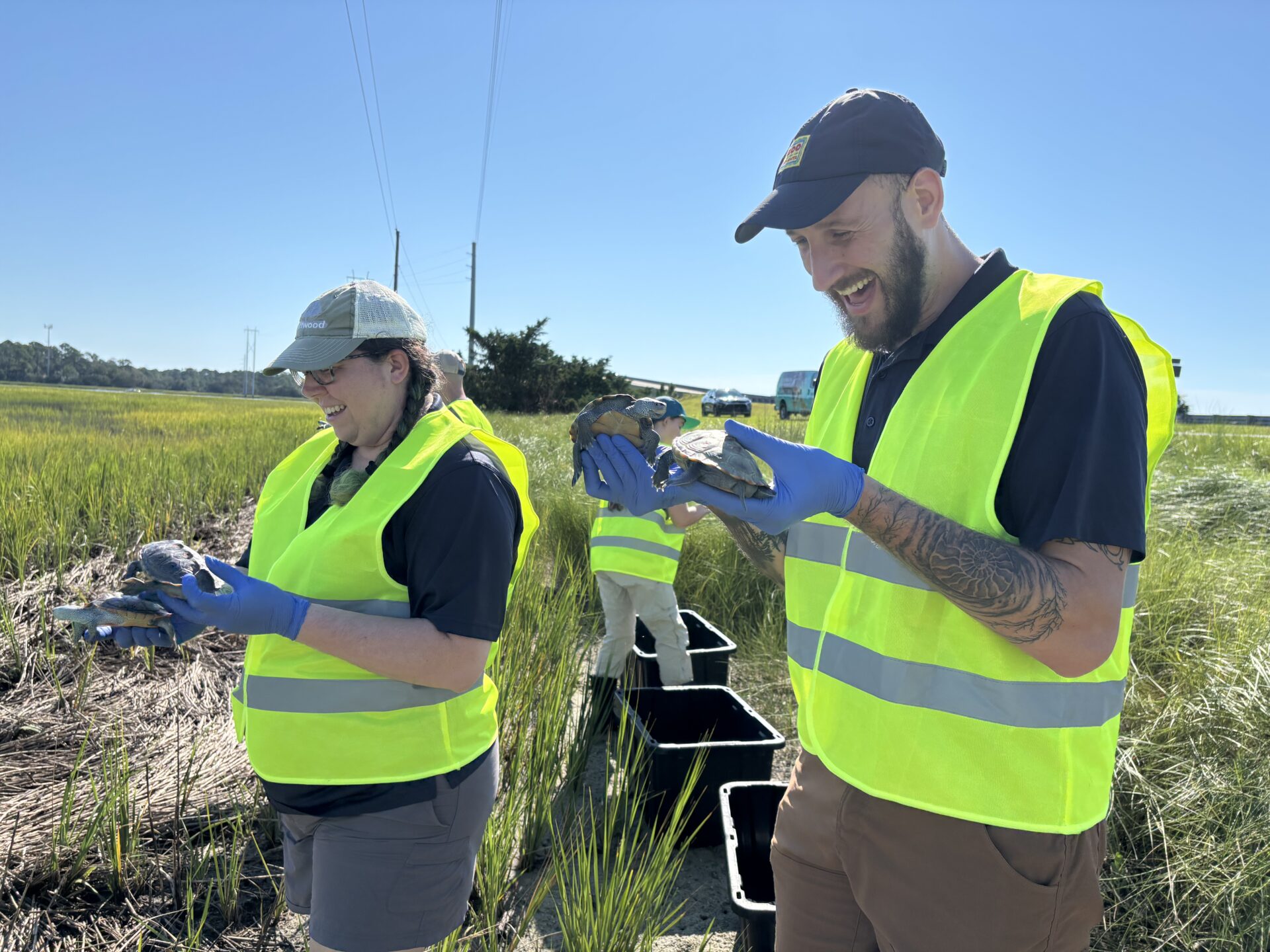 With hands full of turtles and the tide going out, we trekked into the marsh as a crew of Zoo Atlanta team members, GSTC staff, and GSTC volunteers. All that was left was to set the terrapins into the squishy pluff mud and maze of spartina grass, surrounded by fiddler crabs, and wish them luck as they walked away into their new life. Some understood the assignment and immediately took off towards the water. Some needed a few seconds to adjust before disappearing through the mud. And a few needed a little redirection to get their bearings straight before vanishing into the marsh grass. Within about 15 minutes, the two dozen terrapins who spent a year at Zoo Atlanta had made it home, and it was time to start the process all over again.
Back at GSTC, we washed the muck off our shoes and gathered the 25 new baby terrapins into a bin to start the cycle over again. These baby terrapins will call Zoo Atlanta home for the next year, until their ultimate release back into the salt marshes of coastal Georgia. Next time you visit the Zoo, make sure to visit them at Scaly Slimy Spectacular and wish them luck!
Andrew Hogan, Colleen Murphy, and McKenzie Odinson
Education Team
Connect With Your Wild Side #onlyzooatl