
The role of conservation medicine in species recovery
I hope you all had an amazing World Turtle Day this past Saturday!
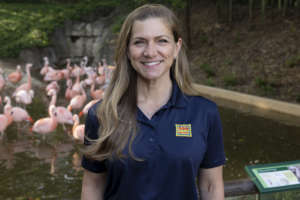 I am Dr. Kate Leach, Senior Veterinarian at Zoo Atlanta, and I have more to share about turtles, and there is no better time to celebrate turtles and tortoises than around World Turtle Day.
I hope you will take a moment here to learn about and appreciate these incredible and endearing animals, while also recognizing the very real conservation challenges turtle species face around the globe. Today I want to highlight my particular favorite tortoise, the radiated tortoise, and share some conservation news. I am honored and grateful to champion the Turtle Survival Alliance (TSA) as one of the seven organizations supported this year by Zoo Atlanta’s Mabel Dorn Reeder Conservation Endowment Fund. The supported project advances conservation efforts for the critically endangered radiated tortoise (Astrochelys radiata) in Madagascar.
At Zoo Atlanta, we are proud to contribute to international conservation efforts through collaboration with organizations including TSA, which has been leading extraordinary work to protect turtles and tortoises around the world. Partnerships among conservation organizations, zoological institutions, local experts, and local communities are essential to protecting species like the radiated tortoise.
As you can see here in photos from the field in Madagascar, radiated tortoises are among the most visually striking tortoises in the world, instantly recognizable by the beautiful starburst patterns on their shells; they are also very personable. Unfortunately, they are also one of the most threatened. Native to southern Madagascar, radiated tortoise populations have declined drastically over recent decades due to habitat loss and intense pressure from the illegal wildlife trade. Large confiscations involving thousands of tortoises at a time have demonstrated just how severe this crisis has become.
But there is some happy news to share! Through TSA’s long-term dedicated work and an involved process that works with local communities, the Malagasy government, conservationists, biologists, animal care teams, and veterinarians, thousands of healthy, rescued tortoises have been returned to the wild into community protected forests in Madagascar.
This funding will support ongoing conservation health efforts focused on health assessments and disease surveillance of both confiscated animals before release and wild populations of radiated tortoises. As part of these efforts, Malagasy veterinary students join the field work and gain hands on experience in wildlife health, which builds veterinary capacity in Madagascar to continue this important work. Conservation medicine plays an important role in species recovery efforts by helping ensure the health of tortoises being released, identifying disease risks, establishing baseline health parameters, and supporting safe management and reintroduction decisions. These efforts help ensure that conservation actions are guided by science and long-term sustainability. Supporting these efforts as a veterinarian has been deeply impactful for me, particularly in the connections and successes with our Malagasy veterinary colleagues and students. I have been fortunate to be a part of the work on the ground in Madagascar and from Atlanta. I hope you have had a chance to see previous stories of Zoo Atlanta’s support for radiated tortoise conservation health.
Modern zoos play an increasingly important role in wildlife conservation through research, veterinary medicine, education, field conservation support, and public engagement. One of the most powerful aspects of zoo conservation is the ability to connect people directly with animals and conservation stories in meaningful ways.
Every visit to Zoo Atlanta helps support conservation efforts both locally and globally. When you visit the Zoo, you are not only helping support the care of animals and conservation programs, but you are also becoming part of a larger conservation community. Education and awareness are powerful conservation tools. By learning about species like the radiated tortoise and the threats they face, you can help spread awareness about the impacts of the illegal wildlife trade and the importance of protecting wildlife in their natural habitats. I hope you will bring with you a strong and meaningful message from here.
The illegal pet trade continues to threaten countless tortoise species worldwide. Many people are unaware of the devastating effects wildlife trafficking can have on wild populations and ecosystems. Simply sharing what you learn with friends, family, and your communities, can help build greater public understanding and support for conservation-focused solutions.
I am sincerely grateful to the Mabel Dorn Reeder Conservation Endowment Fund for supporting this work and helping advance conservation health initiatives for radiated tortoises. Conservation is built through partnerships, education, science, and public engagement, and every person who visits a zoo, shares a conservation story, or speaks out against illegal wildlife trade can help make a difference!
Thank you for supporting conservation and for helping us continue to advocate for turtles and tortoises around the world! I hope you can see how special they are!
Kate Leach, DVM
Senior Veterinarian at Zoo Atlanta and project champion, Turtle Survival Alliance
Connect With Your Wild Side #onlyzooatl